
Start with the day-to-day problem.
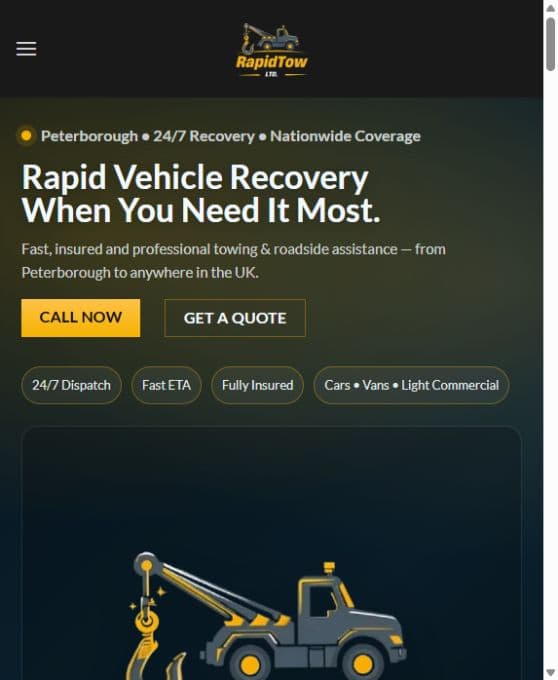
A driver looking for recovery may be stressed, using a phone and unsure which service is needed. The website has to introduce the provider quickly and make contact easy to find. At the same time, customers arranging planned transport need information about coverage and quoting. Rapid Tow’s website addresses these different situations through a call-focused opening, service categories and a short explanation of the recovery process.
Give the experience a clear structure.
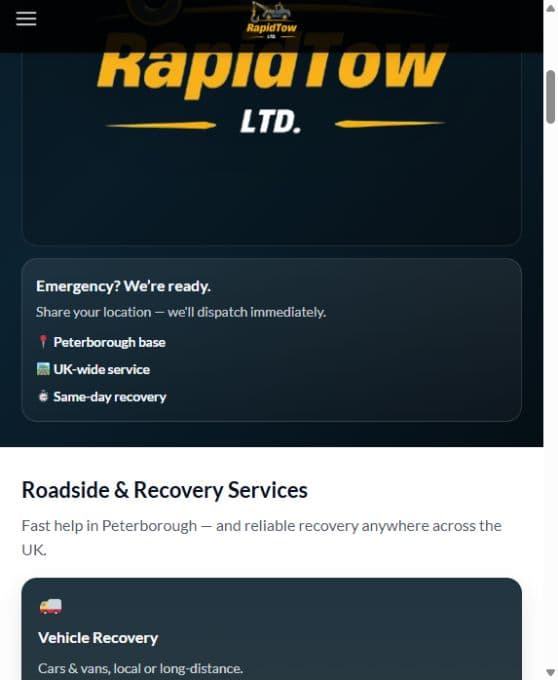
The homepage identifies the Peterborough base and presents recovery and roadside assistance before offering Call Now and Get a Quote actions. Below the opening, service cards separate recovery, breakdown assistance, jump starts, vehicle transport, accident recovery and tyre help. Process, coverage, pricing information and FAQs then add detail for visitors who need more context before contacting the team.
The details behind the interface.
Contact prominence
The opening places a telephone link beside the quotation route, supporting both an immediate conversation and a more considered enquiry. The page returns to contact prompts throughout its content so the visitor does not have to navigate back to the top.
A service menu based on the problem
Separate cards name the common reasons a driver might need assistance. Short descriptions and service-page links let the visitor start with their situation rather than needing to understand the business’s internal terminology.
Explain what information comes next
The process section asks visitors to describe their location, vehicle and situation, then explains confirmation of availability, estimated timing and price. A visible quote area introduces pickup and drop-off postcodes and vehicle type as useful enquiry details.
Coverage and quoting context
A dedicated section presents the local base alongside wider transport coverage. Pricing content explains that job details affect the quote. This provides context for a conversation without requiring the case study to reproduce changing rates or promise arrival times.
Questions before contact
FAQ headings cover response times, service areas, pricing and information to provide. This gives visitors a way to understand the proposed process before choosing a contact route.
A website organised around the visitor’s next step.
The website provides a service-led public presence with a clear emphasis on contact and recovery enquiries. Its design connects urgent needs with practical information for planned transport. This case study records the public page structure, not independently verified response times, insurance status, reviews, recovery results or the successful operation of every contact link.
Discuss your project goals