
Start with the day-to-day problem.
A prospective visitor to a therapy practice may want to understand the services, learn about the provider and find practical appointment information. The website needs to offer a clear starting point without expecting the visitor to know the practice already. The design brief reflected in the public experience is to organise the service information and make booking or contact easy to locate.
Give the experience a clear structure.
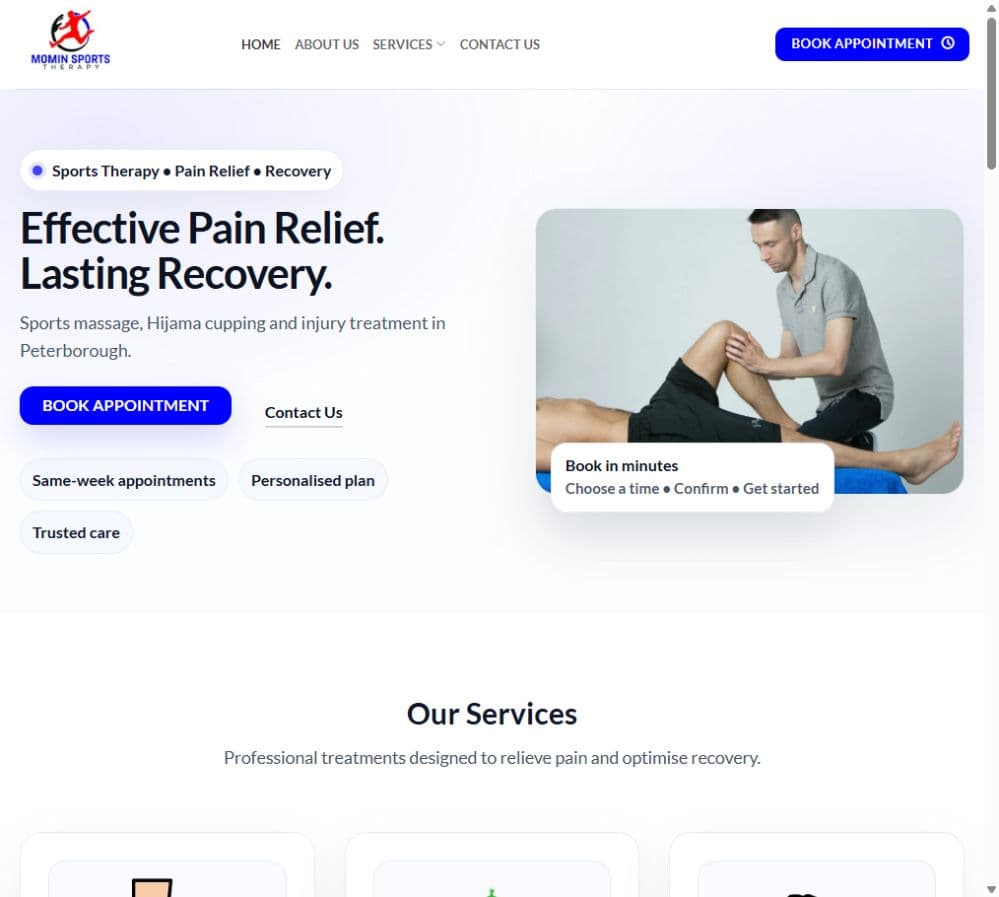
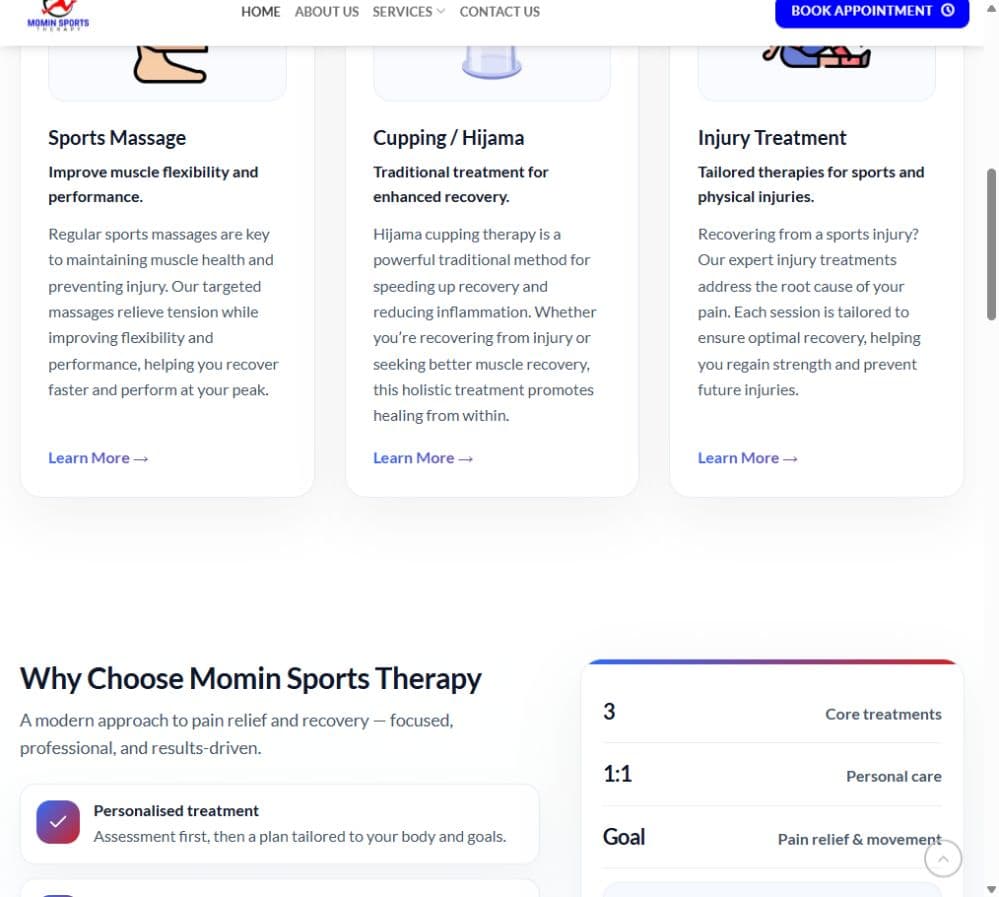
The homepage introduces the practice and its Peterborough location, with an appointment action visible in both the navigation and hero. Separate service cards introduce sports massage, cupping and injury treatment as the practice’s advertised service categories. Further sections explain the practice’s approach, present local details and repeat the booking route. This case study considers that communication structure rather than assessing clinical claims.
The details behind the interface.
Appointment access from the outset
A booking link appears in the header and the opening content, alongside a contact route. The design gives visitors who already know the practice a direct next step while leaving service information available for those still exploring.
Services presented individually
Three illustrated cards introduce the practice’s core categories, each with a link for more information. This creates a compact overview and lets the visitor choose where to read further.
A consistent practice identity
The page pairs treatment imagery with a simple service introduction and consistent appointment prompts. The emphasis remains on the practice and its visitor journey rather than an unrelated catalogue of products.
Practical local information
A dedicated location section presents the Peterborough clinic address, telephone and map area. Those details support planning a visit after the prospective client has explored the services.
Reinforce the next step
The closing section repeats the appointment and contact actions and describes the proposed sequence from choosing a time to a consultation. This gives the page a clear end point after the informational sections.
A website organised around the visitor’s next step.
The website connects a local practice identity with service discovery, location information and appointment entry points. The result described here is a clearer website structure for prospective visitors. No treatment effectiveness, recovery outcomes, professional credentials, testimonial accuracy or appointment availability is independently asserted in this case study.
Discuss your project goals